



March 27, 2024
Galician railway
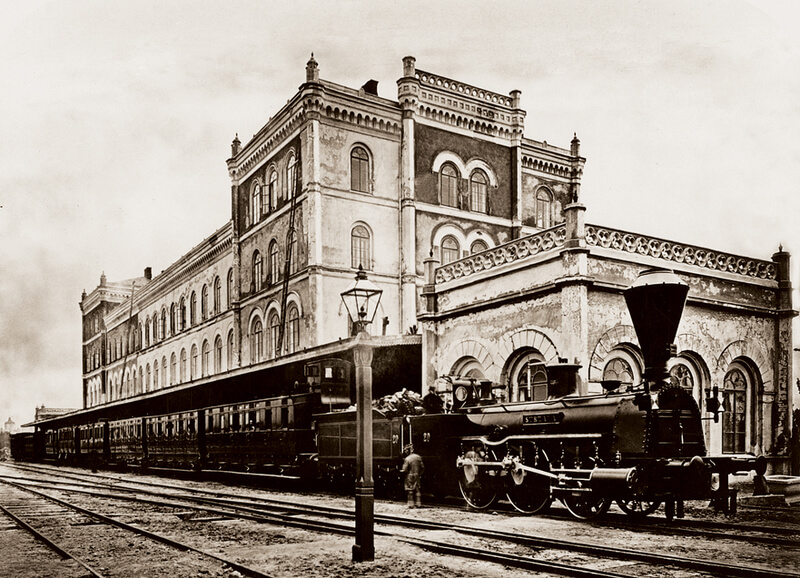
Railways of Halychyna are one of the oldest in Ukraine. Their history begins in the middle of the 19th century, when Western Europe experienced a surge of new productions, and a demand for new types of transport was formed. In 1841, the Austrian government created a special project for the construction of rail connections - the "Railway Affairs Program". It stated that the new transport network will bring great benefits to all of Europe. Regarding Halychyna, it was concluded that it needs a railway in order to develop industry, to export raw materials and agricultural products.
Source: Local history .
The project was implemented for several decades. High-rise bridges had to be built over the Carpathian rivers, kilometer-long tunnels had to be dug in the mountains. They even had a dream to reach India.
It hasn't been built yet - it's already sold
The "Railway Affairs Program" provided for the construction of transport infrastructure with two types of ownership - state and private. All connections departing from Vienna were to be state-owned. The Galician Railway, which was designed in 1840-1842, also belonged to them. It was supposed to be built in the direction of Bochnia — Dembytsia — Ryashiv — Perevorsk — Przemysl — Lviv. Further, from Lviv, the tracks were to go to Krasnoy, and there split into two branches: to Brody and to Pidvolochysk. The southern line from Lviv was supposed to pass through Khodoriv and Stanislaviv in Chernivtsi.
Preparations for the construction of the railway began in 1845. However, a bad harvest and a difficult political situation stopped the development of railways. 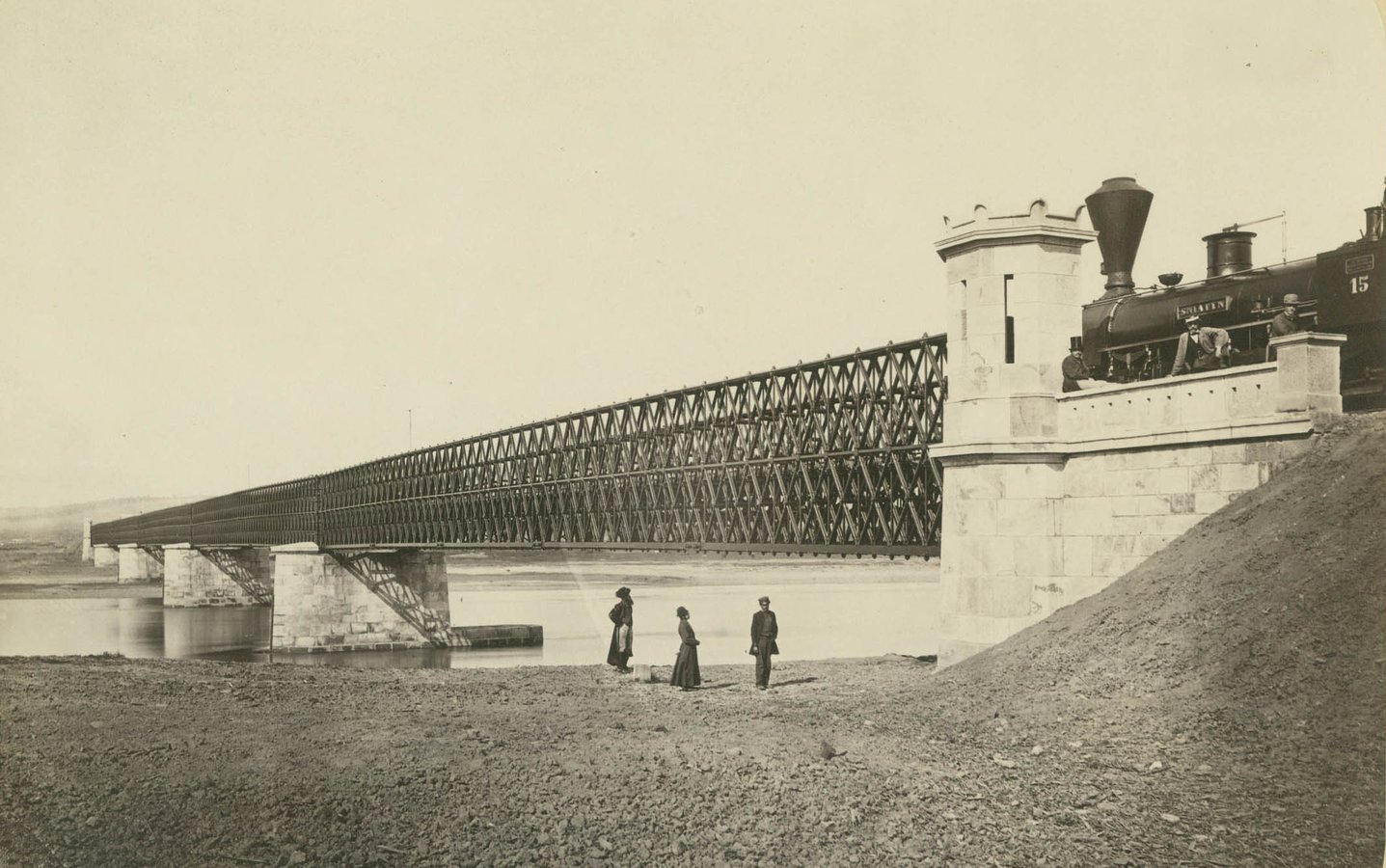 Railway bridge across the Dniester in Yezupol (now Ivano-Frankivsk region), 1868. Photo: smu.edu
Despite everything, the Habsburg government built the most railways among all the countries of the world by 1854 - 1,766 kilometers. 367 million guilders were spent on it. It was these expenses that triggered the financial crisis — the public debt increased to 286 million. They decided to sell part of the network. In 1856, the entire Galician railway, together with the planned connections to Lviv and further east, became the property of the private Northern Railway named after Ferdinand. Later, it was renamed the Privileged Society of Galician Railways named after Carl Ludwig.
The first line laid in Galicia connected Dembytsia and Przemyśl. It was commissioned on November 4, 1860.
To Lviv
In 1859, the construction of the railway from Przemyśl to Lviv began. Its length was 98.6 kilometers. Working conditions were exhausting. Landless and landless peasants were employed as manual laborers. The greatest difficulties had to be overcome in the swampy areas of Sudova Vyshna, Horodok and Lviv. Near Horodok, through swampy terrain and hills, tracks had to be laid not straight, but in the form of two considerable serpentine semicircles. Therefore, the precinct became longer by almost 15 kilometers.
Although the working conditions were difficult, the builders completed the section between Przemyśl and Lviv in less than two years. Bridges were built on the Vyar, Vyshnya and Vereshchytsia rivers, and stations were built in Medytsia, Mostyske, Sudova Vyshnya, Horodok and Mshana. The railway station in Lviv was built in October 1861. 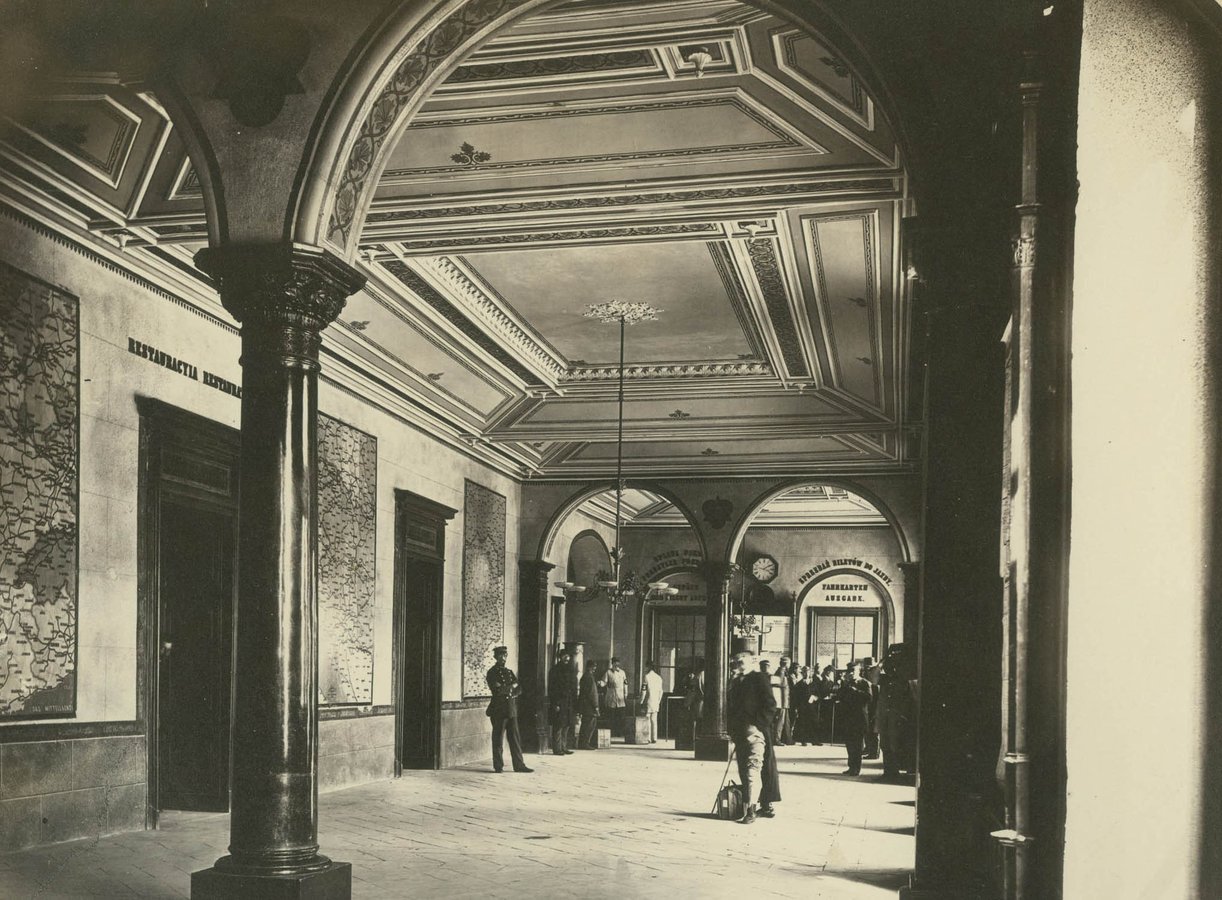 Station lobby in Lviv, 1860s. Photo: smu.edu
The first 4-car passenger train named "Yaroslav" arrived in Lviv from Przemyśl on November 4, 1861. Gazeta Lwowska wrote: "The day has come when we had to unite with the entire monarchy and with Western Europe . " Hundreds of spectators greeted the train at all stations, playing music. "It was fascinating to watch the reaction of the village people. Old and young, big and small, strong men and women, infirm old men and small children came everywhere. Some stood in dumb surprise, others raised their hats, shouting loudly, or clapped their hands and raised them to the sky.
The first border
Lviv was to become the starting point for four routes: to Kraków, Chernivtsi, Brody and Pidvolochysk. Thus, the railway had to develop not only in the western, but also in the eastern and northern areas.
English engineers presented the technical plan for the construction of the highway that was supposed to connect Lviv with Chernivtsi. The construction of the 267-kilometer track lasted two years. On September 1, 1866, the first train left the Lviv Palace in the direction of Bukovyna. Nine hours later, he was met in Chernivtsi. In a few years, the following sections were completed to Suceava, and later to Iasi.
Prince Leon Sapiga wrote that Europe could be connected to India through Lviv and Chernivtsi. "If our railway was built, it would be possible to get from London to Bombay in 6-8 days," recalled Sapiga, the first president of the "Lviv-Chernivtsia-Yasa Railway" company. 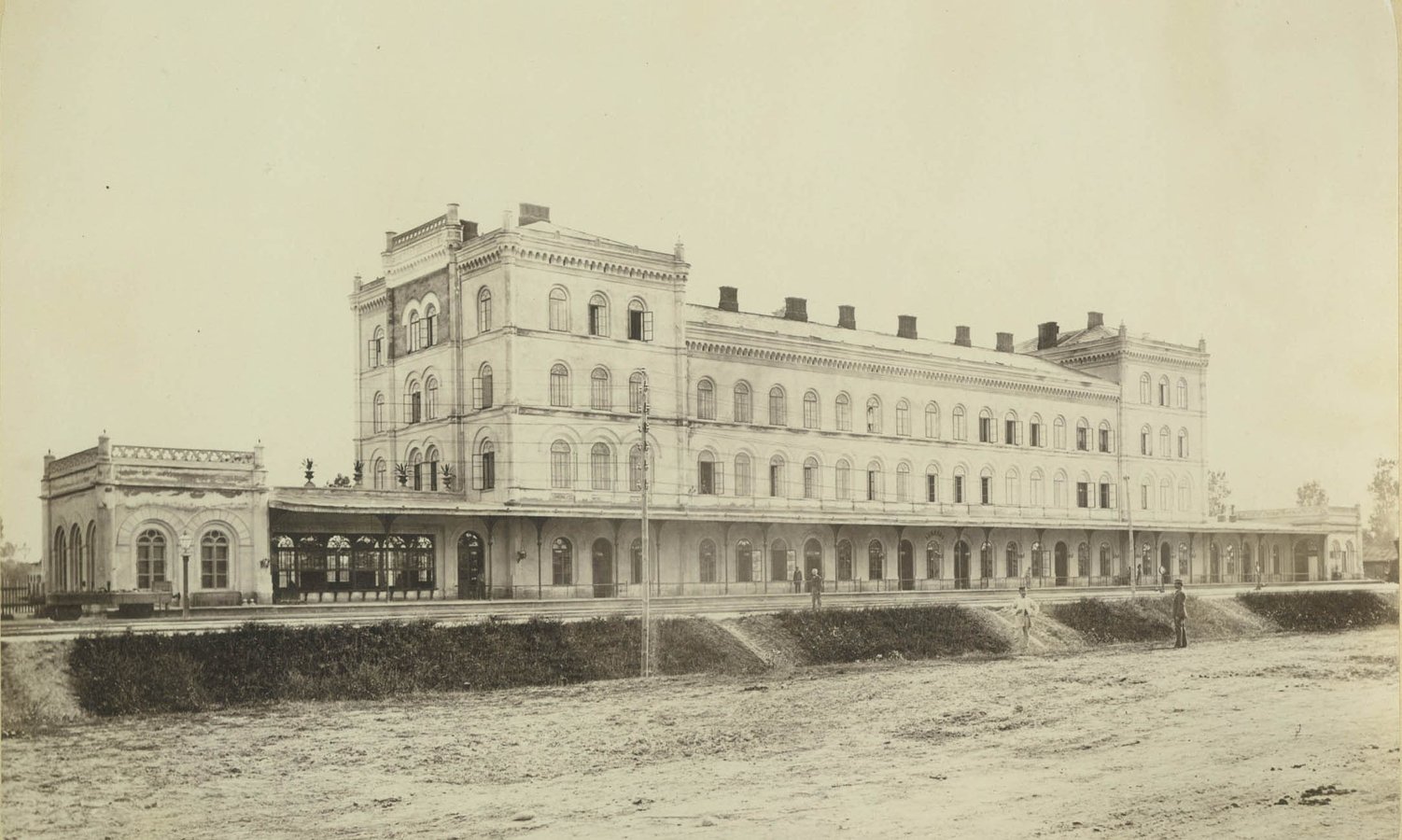 Chernivtsi railway station in Lviv, 1868. Photo: smu.edu
The direction to the east of Lviv - to Brody and Pidvolochysk - was also considered promising. The biggest obstacle in the construction of railways was the problem of ownership of land - it was possible to lay tracks through private plots only with the consent of the landowner. The Lviv — Brody line was commissioned in 1869. She reached the Russian border. Four years later, Russia brought its branch to the Radyvyliv station - this is how the transport union of the two regions took place.
On December 28, 1870, the Lviv — Krasne — Zolochiv branch was extended to Ternopil, and a year later — to Pidvolochysk and Volochysk. It was then that Galicia received the first international railway line. Lviv established connections with Odesa, and in the west - via Krakow and Wroclaw - with Hamburg.
In 1873, another strategically important line Kivertsi — Kovel — Brest was commissioned. It was part of a powerful highway that stretched from Odessa and Kyiv to the borders of Germany and Baltic ports.
Break through the mountains
Local railway lines connecting the trans-European highway with the resource-rich Carpathians were of great importance for the economy of the region.
Three railway arteries connected Halychyna with Transcarpathia, going out into the valleys of the Uzha, Latoritsa and Tisza. The fourth Carpathian line, named "Lemkivskaya", only touched the edge of the Lviv railway. But it was the first transcarpathian track on which bridges and tunnels appeared. This track started in Przemyśl, passed through Nowe Mysto, Dobromyl, Khyriv, Skvaryava and further to Slovakia.
The project of the Carpathian highway was developed in 1870. It was supposed to connect the Hungarian capital Pest with Odesa via Miskolc, Sighet, Kolomyia, Chernivtsi, Iasi and Chisinau. In order to put into operation this shortest route from the Black Sea to Hungary, it was necessary to lay almost 150 kilometers of tracks through the Hutsul region: Szyget — Rakhiv — Delyatyn — Kolomyia. The Austrian government considered this area strategically important: if Odesa was not connected to Europe through Austria-Hungary, the trade routes would be intercepted by Turkey and Romania. The Habsburg monarchy also had local interests: the region rich in forest, salt and iron should eventually be connected with other parts of the empire.
In order to connect Lviv and Pest by rail, it was necessary to lay tracks through the Volovetsky Pass. From the Galician side, the line Lviv — Stryi — Beskid should have been built. At the same time, they planned a branch from Stry to Bolehiv — Dolyna — Kalush — Stanislaviv. The opening of the routes took place six months late, as the contractor violated the terms of the contract. Lviv was united with Stryi in September 1873, and with Stanislavov in May 1875. 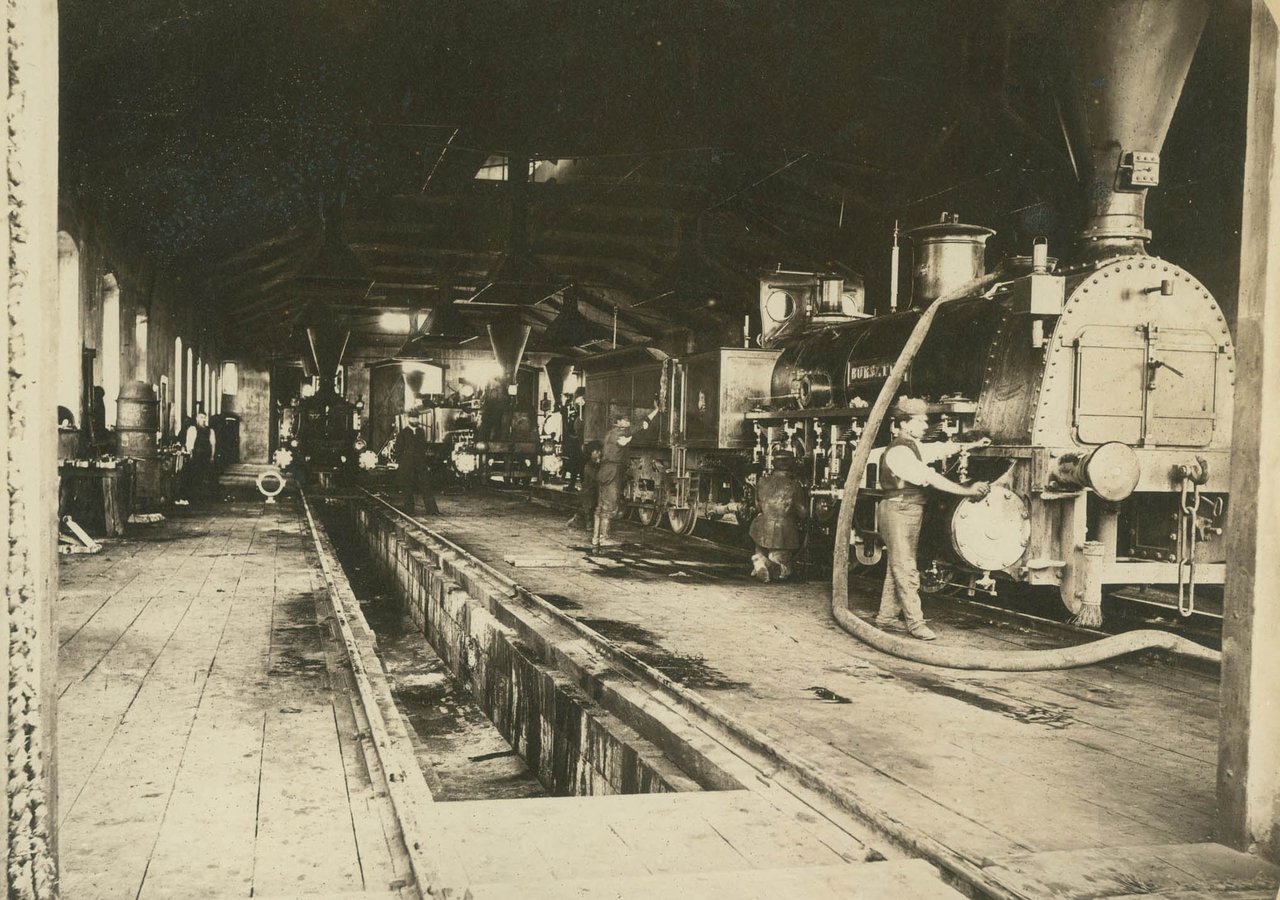 Railway depot in Stanislavov (now Ivano-Frankivsk), 1868. Photo: smu.edu
The southern part of this railway was laid even longer - the project stretched for ten years due to financial and political problems. In 1883, the Austrian government undertook to build the Stryi-Beskid section. Instead, in 1884, the Hungarian government undertook to connect Mukacheve with the Beskids. The village of Lavochne became a common station for both railways.
The section between Volovets and Beskid was very difficult. The builders had to lay five tunnels, one of which was 1,747 meters long. In the foothills, the railway crossed the Opir river valley 12 times. One of the bridges was 270 meters long and 33 meters high, the other - 140 and 29 meters. At that time, these structures were among the largest in Austria-Hungary. The construction of the bridges was supervised by an engineer from Lviv, Mauritsii Mikhalskyi.
The opening of the route took place on April 4, 1887.
Falling bridges
The next important step was the construction of a railway along the highest part of the Ukrainian Carpathians. The project from the Galician side involved laying a line from Stanislavov to Voronenka. And from the south - from Bochko to Kereshmeze.
Construction in the direction of Voronenka began in 1893. In Delyatyn, three construction enterprises were created, each of which received one different shade for the execution of works. Hundreds of specialists from Italy arrived for the construction, many peasants from the surrounding areas came to work as manual laborers.
"More than 150 people worked on the construction of only one tunnel in Voronetsi, " the newspaper "Halychanyn" wrote. — Bands of Masurians headed for Prykarpattia, but they were late to the place of work, they could not find good earnings, so they began to engage in robbery. One Italian was killed in Vorokhta, and Hutsul farms were also attacked."
The large scale of the works and thousands of people gathered in the Prut Valley forced entrepreneurs to build barracks, warehouses, shops, and canteens. Mykulychyn, Tatariv and Vorokhta changed their rural appearance and became small towns. Post office and telegraph appeared. 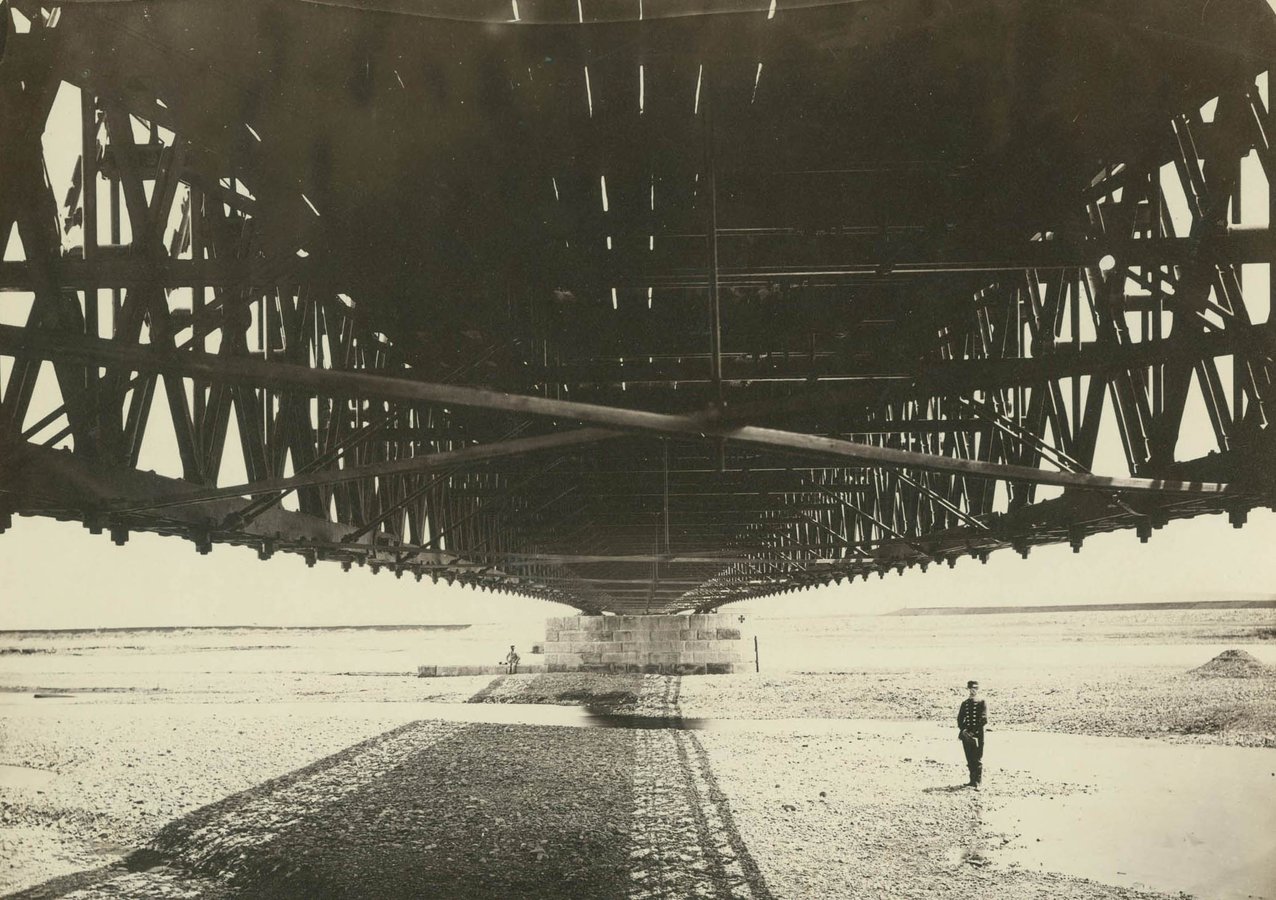 Bridge over the Prut River near Snyatyn. Photo: smu.edu
Three tunnels were drilled on the railway line — in Yamnia, Mykulychyna and Voronetsi. Nine large stone bridges were built on the Prut.
The first bridge was a vaulted viaduct over the Lyubizhnya River in Delyatyn. It consisted of eight arches, each 15 meters long, and one 22-meter long. The bridge stretched 275 meters and rose 32 meters above the surface.
The highlight of the route was the bridge over the Prut in Yaremcha. The structure had eight arches and stretched 190 meters. Engineer and bridge builder Stanislav Kosynskyi wrote: "The railway from Stanislavov through Voronenka to Hungary should open on the 16th of October of this year. Now a huge bridge over the Prut River, near Yaremcha, is being built on its way. The vault of that bridge will be 65 meters wide, one of the widest in the whole world. The bridge will be made of stone, not of iron, as was usually the case on railways."
In 1898, two trains ran daily from Stanislavov to Kereshmeze. On weekends, a third flight was added, designed so that vacationers could stay at the resort all day and return home in the evening.
Most of the Carpathian bridges were destroyed during the First World War. They were restored in the 1920s.
From Xiang to...
In 1897, the plan of the last Carpathian line was finished, which was supposed to connect Lviv with the Uzha valley through the sources of the Dniester and Sian rivers. During the development of the project, the materials of the previously planned railway Sambir — Stariy Sambir — Tershiv — Limna — Lutovyska were used. After the agreement between the autonomous self-government of Halychyna and the royal government of Hungary, Sianki and Uzhok were declared the stations of the junction.
Work on the Lviv — Sambir line began in 1901. The construction took place with difficulties: the railway had to run through the swampy Transnistrian region, forcing several years. Three bridges were built in this area - over Vereshchytsia, Vyshenka and Strvyaz. 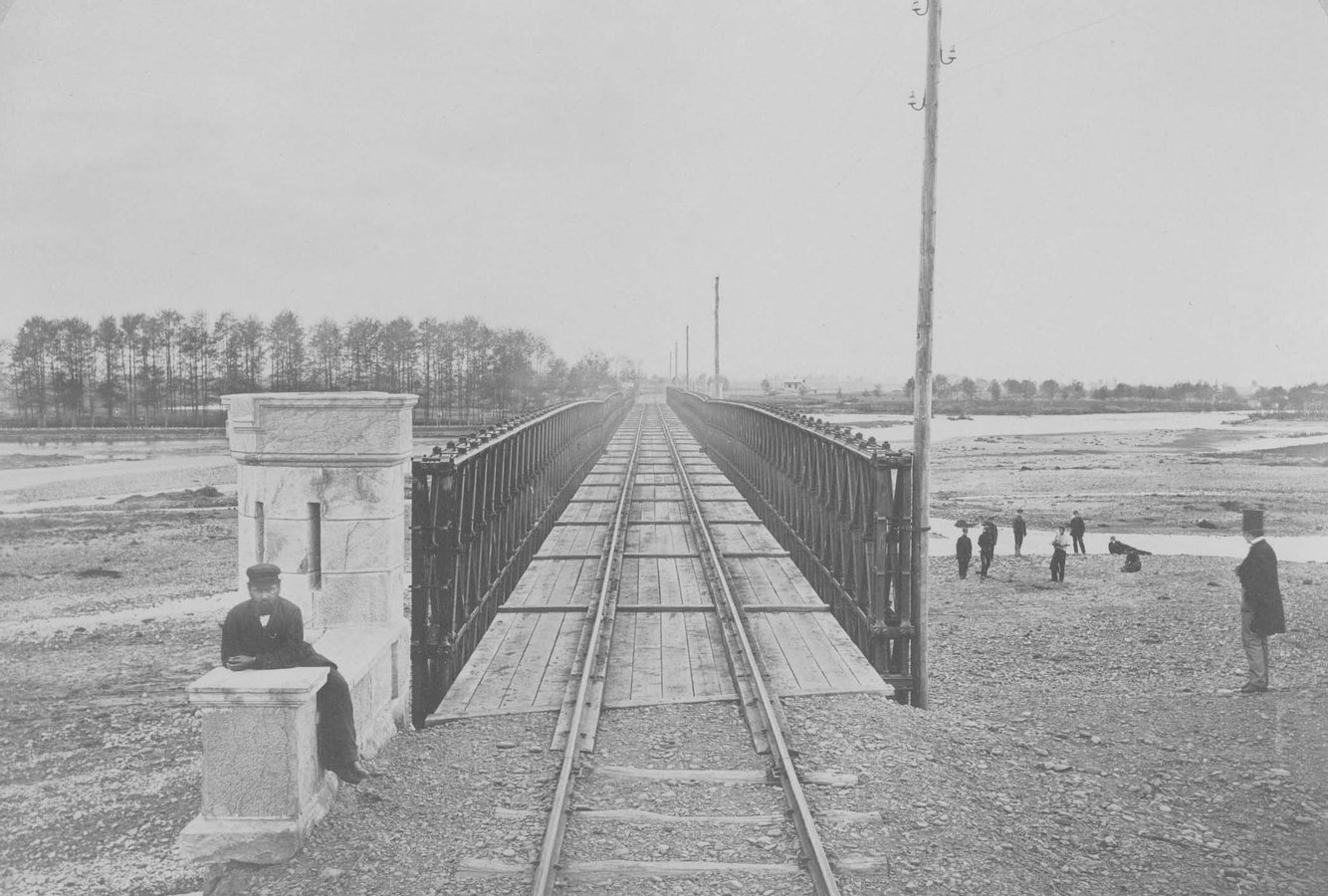 Bridge over the Bystrytsia River. Photo: smu.edu
The Sambir-Syanki track first passed through the narrow Dniester valley, and then through the Yasenytsia valley to Yavora and Turka. On this section, tunnels were laid and bridges were built, which became the decoration of the picturesque route. One of the most famous was the 160-meter viaduct in Rozluchchi at a height of 25 meters above the Rika River. The 350-meter bridge in Turka was the longest in the Carpathians.
Syanki was connected with Uzhko in 1905.
The fall of the railway empire
In 1890, the operational length of Galician tracks was 1,375 kilometers. By 1912, its length had increased by another 950 kilometers.
Repair companies were built at hub stations to monitor the serviceability of trains. However, the rolling stock was overhauled in Germany.
On March 24, 1904, one of the largest railway stations in Europe at that time was opened - the new palace in Lviv. It attracted not only architecture, but also comfort. The station had central heating, electric lighting, clocks, and ventilation. Five tunnels led from the waiting rooms to the platforms. Trains stopped under a beautiful arched floor made of glass and metal. At the central entrance there was a large vestibule that served as an operating room at the same time. On the left there were five 1st and 2nd class ticket offices, on the right - five 3rd class ticket offices. Before the beginning of the First World War, another beautiful building was built in Lviv - the new premises of the Directorate of Railways. It was opened in the spring of 1914.
After the end of the First World War and the defeat of the Western Ukrainian People's Republic, all the railways of Galicia became the property of the Polish operator - Polskich Kolej Panstwowych. After the change of jurisdiction, the network was divided into three railways - Kraków, Lviv and Stanislavivska.
Bukovyna became part of Romania, so the terminal point of the Stanislavivska railway in the direction of Chernivtsi became the Snyatyn–Zaluchchia station. Despite political vicissitudes, the track between Lviv and Chernivtsi continued to serve as a bridge between the Balkans and Central Europe. In the years 1929–1932, over 600,000 tons of cargo were transported annually by this canvas, in particular, 320,000 tons were addressed to Germany, 150,000 tons to Poland, and 100,000 tons to Czechoslovakia.
source: https://inlviv.in.ua/
Share
